


Daily Intake Levels
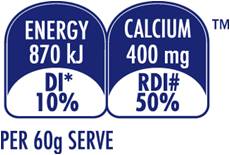 The reference values used for the Daily Intake Guide are based on those provided in the Australia New Zealand Food Standards Code (FSC). The FSC has outlined the composition and labelling requirements for food.
According to the FSC, a balanced diet for an average adult is made up of the following nutrients each day:
| Nutrient | Quantity Per Day |
|---|---|
| Energy | 8,700 kilojoules |
| Protein | 50 grams |
| Fat | 70 grams |
| Saturated Fatty Acids | 24 grams |
| Carbohydrates | 310 grams |
| Sugars | 90 grams |
| Sodium (salt) | 2.3 grams |
| Dietary Fibre | 30 grams |

The FSC lists the above reference values for daily intake levels based on an average adult diet of 8,700 kJ. However, an individual's intake may vary depending on their energy needs and lifestyle.
Remember
It's important to remember that the Daily Intake Guide is just that - a guide.
It has been designed to provide you with a guide to the nutrional composition of the food you're eating and beverages you're drinking. It can help you decide what's right for you!
The DI values are based on an average adult's daily requirement of 8700kJ. Your DIs may be higher or lower depending on your energy needs.
DIs are not recommendations, but rather an acceptable intake which provides a benchmark suitable for the majority of people.
The DI values are not a target for your day's intake nor are they an average. The DI values should be used as a guide to help you make informed choices about the foods you eat.
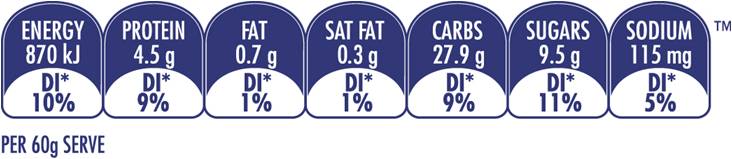
Did you know?
 Food Standards Australia New Zealand is a bi-national government agency. Its main responsibility is to develop and administer the Australia and New Zealand Food Standards Code, which lists requirements for foods such as additives, food safety, food labelling and GM foods. The Daily Intake Guide is made up of nutritional information and guidelines from the Food Standards Code.